

Harlem Sidewalk Violation Removal Without Disrupting a Busy Block
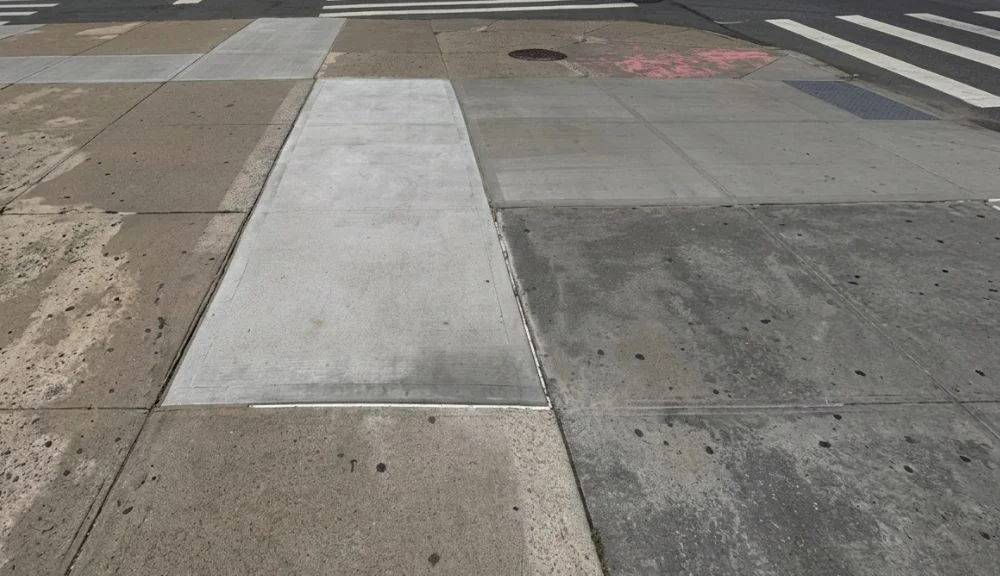
Project: Sidewalk Violation Removal in Manhattan
Client: A Multifamily Residential Property Owner
Location: 646 Malcolm X Blvd, New York, NY 10037, situated in Central Harlem, Manhattan, near West 142nd Street, one of the neighborhood's busiest pedestrian corridors. Residents, school-goers, and commuters pass through continuously throughout the day.
Service Provided: NYC DOT-compliant sidewalk restoration involving the removal and replacement of 15 severely damaged concrete slabs across the property frontage. The scope included repair and sealing of deteriorated joints between slabs, curb cut installation along with ADA accessibility features, precision leveling, and blending the new concrete with the existing sidewalk for a seamless ADA-compliant finish.
Permits Required: Sidewalk Construction Permit Sidewalk Closing Permit
Permit Fee: $70 per permit for the Sidewalk Construction Permit and Sidewalk Closing Permit, totaling $140 in DOT permit costs.
Estimated Project Cost: $6000–$7,000.
Project Execution Timeline: The repair was completed in just two weeks from permit approval, and then the inspection process and final sign-off took around a month.
A Sidewalk That Had Been Failing for Years
For Manhattan property owners facing a similar situation, our NYC DOT sidewalk violation removal service covers all five boroughs with permits, repair, and official clearance.
"You could see it coming apart slab by slab," says the owner of the multifamily building at 646 Malcolm X Blvd, describing a stretch of sidewalk that had been quietly deteriorating along one of Harlem's busiest residential corridors. "Some sections had sunk, others had lifted, and the joints between them were just falling apart. We knew it was a liability, we just hadn't gotten around to fixing it."
By the time the owner reached out, six slabs had been cracked through, unevenly settled, and separated by joints that had opened up enough to catch a foot or fill with water after every rain. On a block with constant foot traffic from residents, school-goers, and commuters, the risk wasn't theoretical. "We had a few close calls with people stumbling," the owner says. "That's when we stopped putting it off."
What Led Them to DOT Sidewalk Repair NYC
What concerned the owner most wasn't just the repair itself, it was the idea of shutting the block down for an extended stretch. "We've got a building full of residents and a street that never really slows down," the owner explains. "We needed someone who could fix it right without turning the block into a construction zone for a month." Our Manhattan sidewalk repair team specialises in high-foot-traffic properties, historic districts, and multifamily buildings throughout the borough.
After an on-site assessment of all six damaged slabs and the surrounding joints, our team returned a clear scope and estimate within a day. From there, we began the permitting process for both a sidewalk construction permit and a sidewalk closing permit through NYC DOT, totaling $140 in city fees. "They walked us through what each permit covered before we even asked," the owner says. "We didn't have to chase down information ourselves."
How the Project Played Out for Them
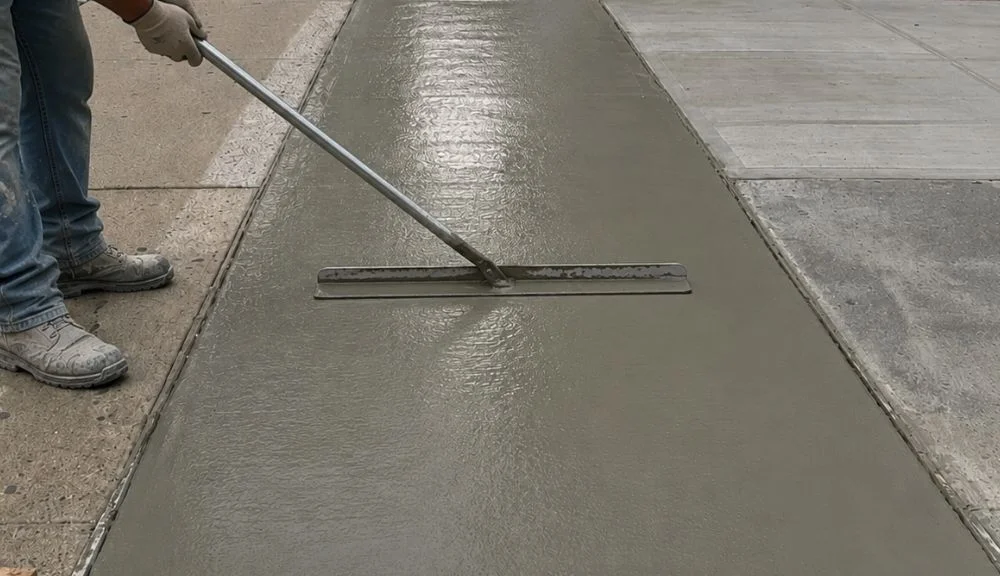
Once the permits cleared, the sidewalk was closed off for construction under the Sidewalk Closing Permit, with the city notified as required, and a pedestrian walkway was set up alongside the site so people could keep moving safely past the work for the full two weeks.
Our crew removed and disposed of each damaged slab, with the sub-base inspected and stabilized before any new concrete went down. Fresh 4,000 PSI ready-mix concrete was poured and finished to NYC DOT specification, selected specifically for its strength against the freeze-thaw cycles common in New York winters and its ability to hold up under heavy, constant pedestrian load. Joints between new and existing sections were rebuilt and sealed for a flush, continuous surface, and precision leveling ensured the entire span graded evenly, with no lingering trip points between old and new concrete. Pedestrian protection stayed in place throughout, keeping the busy residential corridor's foot traffic moving safely.
What We Delivered
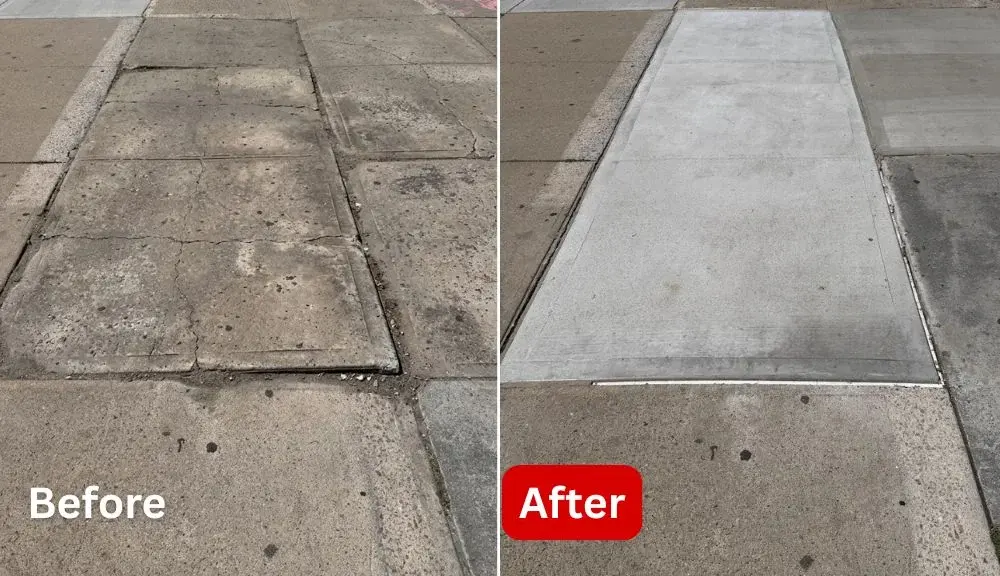
The repair passed DOT inspection without issue, and the corridor reopened fully within two weeks of the first slab coming up. "It looks like one continuous sidewalk now, not multiple patched-up sections," the owner says. Because the fix addressed the structural settlement and joint failure directly, rather than patching over visible cracks, the sidewalk is now meaningfully better protected against the same damage recurring in future years.
What Make Them Surprised
Reflecting on the project, the owner says the experience changed how they think about sidewalk repair on an active block generally. "We thought we'd have to tell people to avoid the sidewalk for weeks," they say. "Instead, people just used the walkway and kept moving, aside from the cones and the crew."
What stayed with them most, though, was watching a severely broken sidewalk get resolved without disrupting daily life on the street. "It was a bigger job than we expected going in," the owner says, "but it never felt like one." Today, the sidewalk at 646 Malcolm X Blvd is level, fully code-compliant, and built to handle the same heavy foot traffic that wore down the original slabs in the first place.