

How We Removed a Sidewalk Violation on Grand Avenue in Maspeth
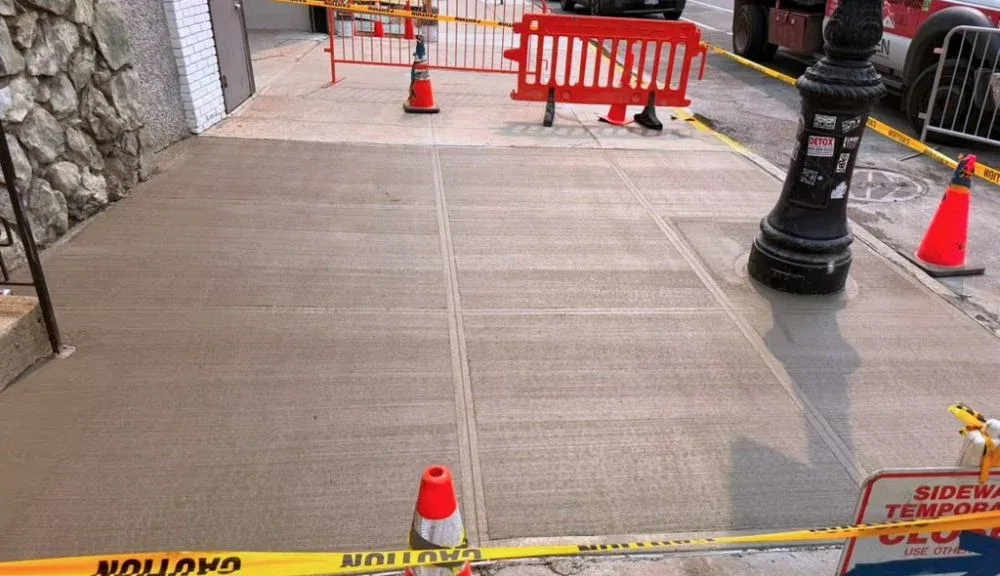
Project: Sidewalk Violation Removal in Queens
Client: A Commercial Property Owner
Location: 69-60 Grand Ave, Maspeth, NY 11378, positioned along the busy Grand Avenue corridor between 69th Street and 70th Street, surrounded by retail stores, restaurants, offices, and automotive businesses. The property sits minutes from Mount Zion Cemetery, Frank Principe Park, and the Long Island Expressway (I-495), with steady pedestrian, customer, and delivery traffic passing through daily.
Service Provided: NYC DOT-compliant sidewalk restoration to remove an active sidewalk violation, involving the demolition and replacement of 9 severely damaged concrete sidewalk flags across the property frontage. Each flag was reconstructed using 4-inch-thick, 4,000 PSI concrete to NYC DOT specification, producing a smooth, durable, ADA-accessible surface built for long-term commercial foot traffic.
Permits Required: Sidewalk Construction Permit, Sidewalk Closing Permit, 811 Utility Mark-Out Ticket
Permit Fee: $70 per permit for the Sidewalk Construction Permit and Sidewalk Closing Permit, totaling $140 in DOT permit costs. The 811 utility mark-out ticket was provided at no cost.
Estimated Project Cost: $4,600–$5,000.
Project Execution Timeline: Construction was completed within two weeks of permit approval, and the DOT inspection and violation dismissal process took around a month.
The Violation That Kept Getting Pushed Down the List
For Queens property owners facing a similar situation, our NYC DOT sidewalk violation removal service handles the entire process from permits to clearance.
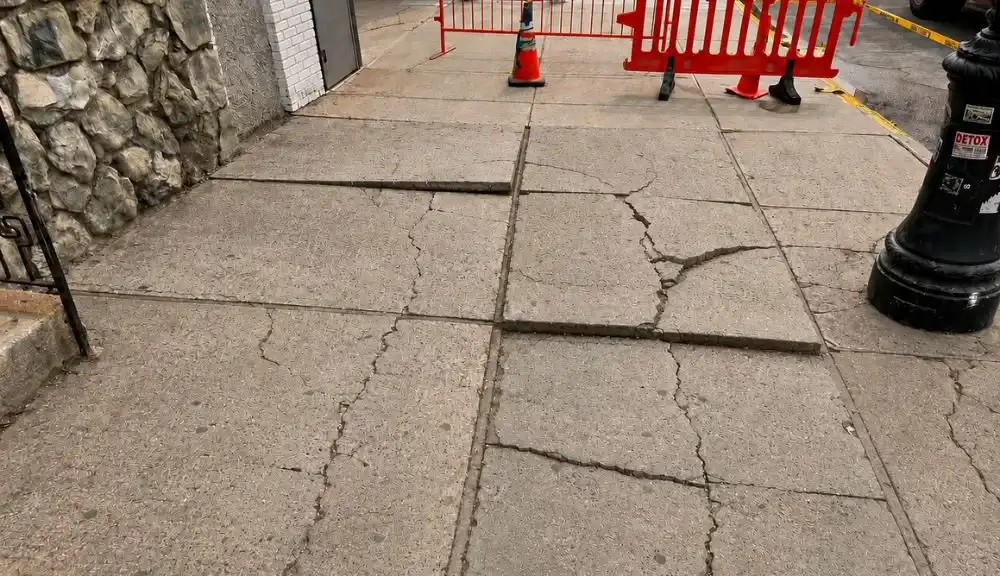
"We got the violation notice and just kept pushing it down the list," says the owner of the commercial property at 69-60 Grand Ave, describing a stretch of sidewalk along Grand Avenue that had cracked, sunk, and separated over time. "Between the customers, the deliveries, and the day-to-day of running the business, it wasn't top of mind until the city made it top of mind."
By the time the owner called, nine flags along the frontage had failed enough that the violation was no longer something to put off. "It's a busy strip. People are in and out of our place and the businesses next door all day," the owner says. "We couldn't keep ignoring a tripping hazard right at our front door."
Why This Property Chose a Crew That Understood Foot Traffic
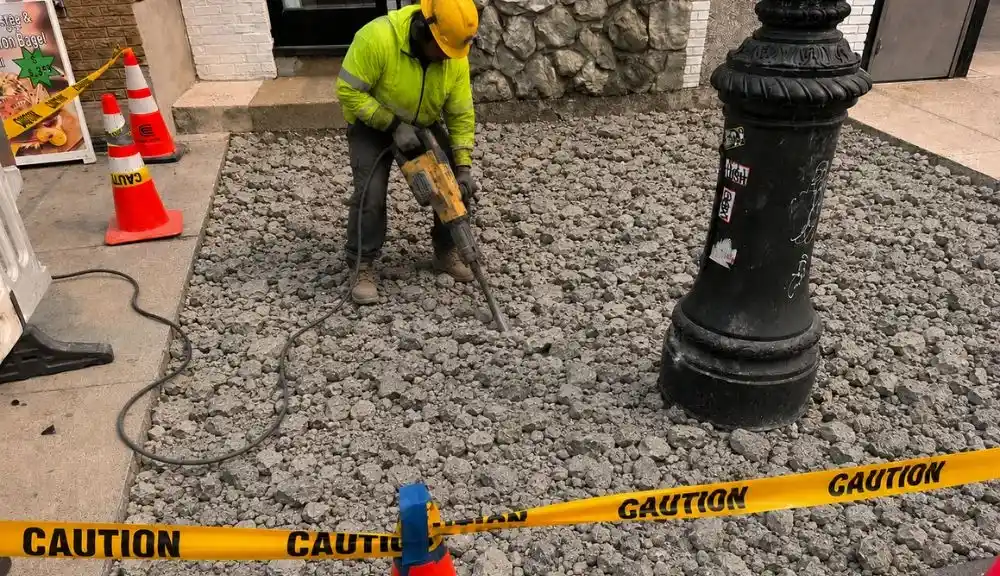
What worried the owner most was losing access to the storefront during business hours. "We can't just close up shop while the sidewalk gets torn out," the owner explains. "We needed a crew that understood we still had customers walking in every day." That’s exactly what pushed them to DOT Sidewalk Repair NYC.
After assessing all nine damaged flags, our team put together a scope and estimate quickly, then filed for the Sidewalk Construction Permit, Sidewalk Closing Permit, and an 811 utility mark-out ticket to confirm what was running underground before any demolition started. "They handled the permits and the utility check without us having to lift a finger," the owner says. "That part alone saved us a lot of back and forth with the city."
How the Work Actually Unfolded on Grand Avenue
Once permits cleared and the utility mark-out confirmed a clear dig zone, the crew closed off the work area under the sidewalk closing permit while keeping a safe path open for customers and pedestrians moving along Grand Avenue.
Each of the nine damaged flags was removed and hauled off, with the base beneath inspected and compacted before new concrete went in. The team poured 4-inch-thick, 4,000 PSI concrete to NYC DOT spec, chosen to hold up against heavy commercial foot traffic and repeated freeze-thaw cycles. Joints were cut and finished cleanly, and the whole span was leveled to remove the trip points that had triggered the violation in the first place.
The Result: A Fix That Went Beyond Just Passing Inspection
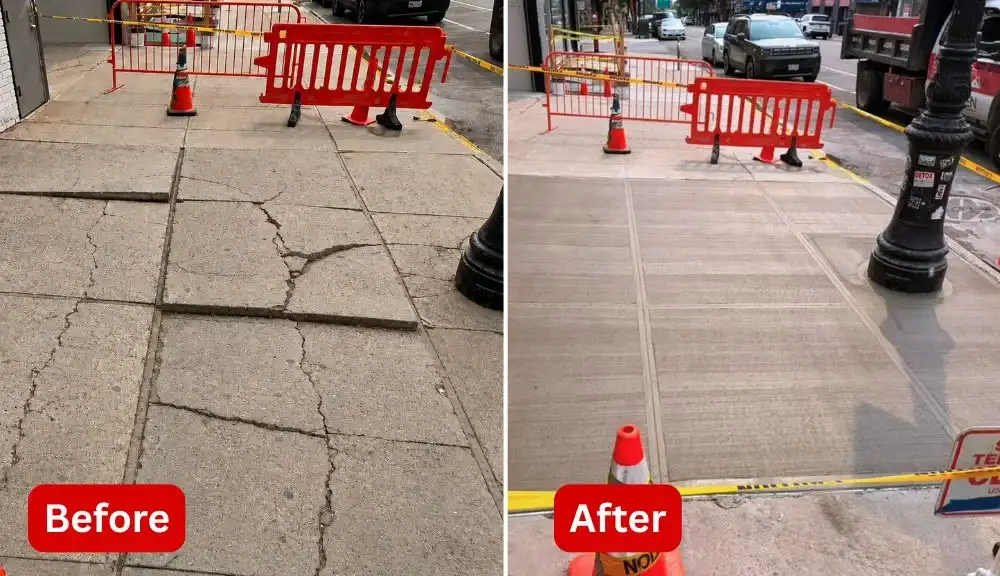
The finished sidewalk passed NYC DOT inspection, clearing the way for the violation to be formally dismissed. "Customers didn't even ask about it once the crew wrapped up," the owner says. "It just looks like a normal sidewalk now, not something that had a violation on it a month ago." Because the repair addressed the failed base and cracked flags directly, the frontage is now built to handle the same volume of foot and delivery traffic that wore down the original sidewalk.
The Part of the Process That Caught Them Off Guard
Looking back, the owner says the biggest surprise was how little the work affected day-to-day business. "We were bracing for a slow month," they say. "Instead, people just walked around the cones and kept coming in."
What stuck with them most was how straightforward the violation removal turned out to be once the right permits were in place. "It felt like a bigger headache on paper than it was in practice," the owner says. Today, the sidewalk at 69-60 Grand Ave is level, DOT-compliant, and clear of the violation that had been hanging over the property.
All in a Nutshell
For the property at 69-60 Grand Ave, the sidewalk violation is now closed, and Grand Avenue has one less tripping hazard along a stretch that sees constant foot and delivery traffic. The project shows what's possible when permitting, utility checks, and construction are handled in sequence, without shutting a business down in the process. For commercial property owners facing a similar notice, the takeaway is simple: a violation doesn't have to mean weeks of disruption, just a clear plan and a crew that gets the work done right the first time.