

How We Fixed a Root-Damaged Sidewalk on a Landmarked Murray Hill Block
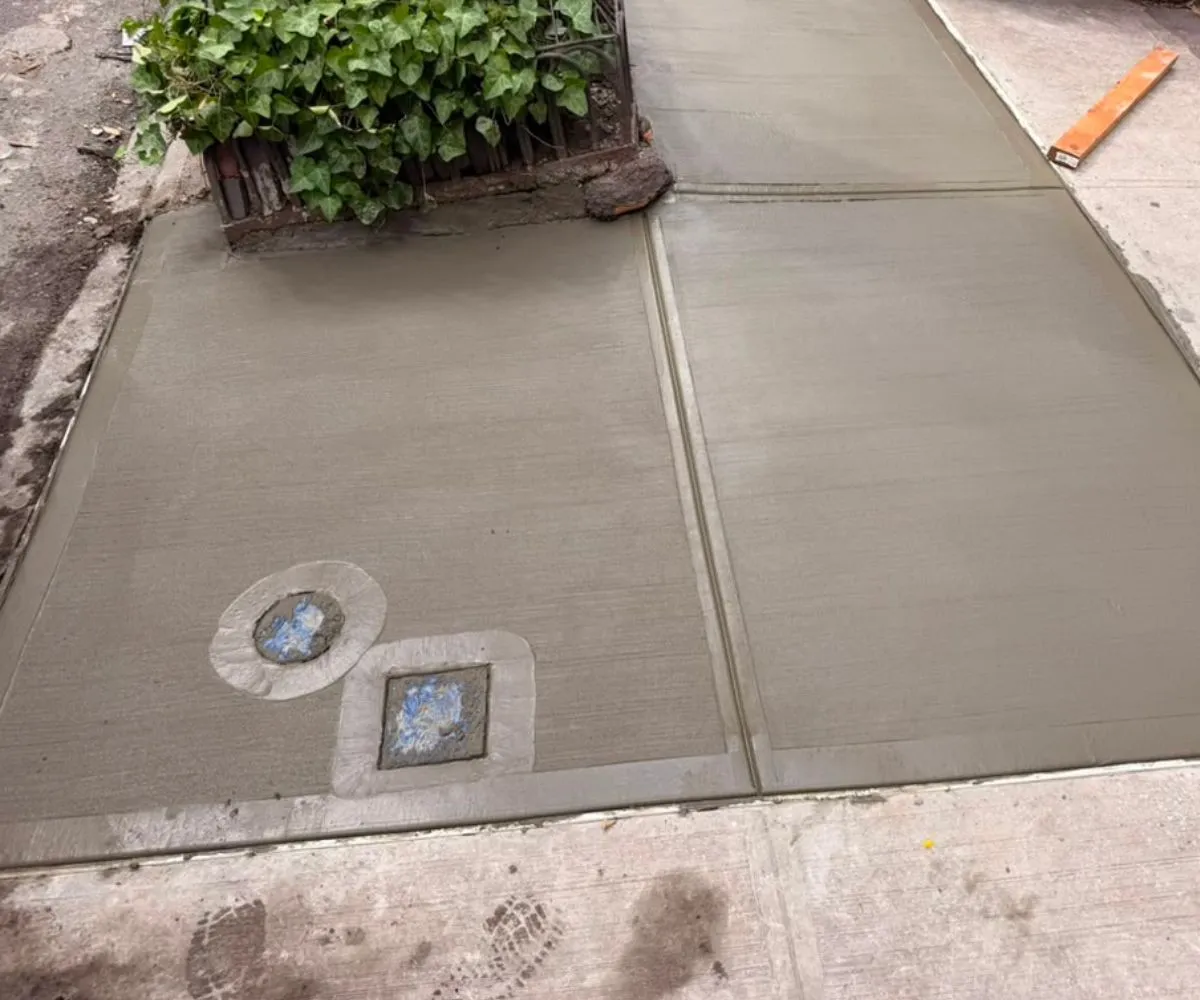
Project: Tree Root-Damaged Sidewalk Replacement and Violation Removal
Client: Residential Property Owner
Location: 115 E 37th St, Murray Hill, New York, NY 10016, a historic residential row house within the Murray Hill Historic District, on a tree-lined block of preserved 19th- and early 20th-century homes just blocks from Park Avenue and Grand Central.
Service Provided: Replacement of 3 tree root-damaged sidewalk slabs (approximately 75 sq. ft.), authorized root pruning, root barrier installation, and NYC DOT violation sign-off, coordinated alongside Landmarks Preservation Commission approval.
Permits Required: LPC approval, NYC Parks tree work permit, Sidewalk Construction Permit, Sidewalk Closing Permit
Estimated Project Cost: Approximately $4,500, including all required permits
Project Execution Timeline: LPC and Parks approvals were secured before any demolition began; concrete replacement and root work followed shortly after sign-off, with DOT clearance finalized once inspection confirmed the repair met spec.
When a Landmarked Block Meets an Uncooperative Tree Root
"You don't realize how much a root can move concrete until it's happening right outside your stoop," says the owner of the row house at 115 E 37th St, recalling how three slabs in front of the property had slowly buckled as a nearby tree's roots pushed upward from below. "It wasn't dramatic at first. Then one day the edge of a slab was just sitting an inch higher than the rest."
Because the property sits inside the Murray Hill Historic District, the homeowner already suspected this wouldn't be a simple call-a-contractor-and-go situation. "I figured there'd be extra hoops," they say. "I just didn't know how many, or who could actually navigate them."
Historic District Rules Add a Layer Most Sidewalk Jobs Don't Have
Unlike a standard root-related sidewalk repair, this project couldn't start with demolition. Because the row house falls under Landmarks Preservation Commission jurisdiction, LPC approval had to be secured before any concrete work could proceed, alongside a NYC Parks tree work permit to authorize pruning near the tree responsible for the damage. Once those cleared, the Sidewalk Construction Permit and Sidewalk Closing Permit followed to allow the physical repair itself.
That's where DOT Sidewalk Repair NYC came in. After assessing the frontage and confirming the root intrusion was behind the violation, the crew mapped out the full permit sequence before touching a single slab. "Nobody explained to me why a sidewalk slab needed sign-off from a preservation commission," the homeowner says. "But once DOT Sidewalk Repair NYC walked me through it, it made sense. This isn't just any block."
If you've received a similar notice, our NYC DOT sidewalk violation removal service covers all five boroughs, including sidewalk repair in Manhattan.
Root Pruning First, Concrete Second
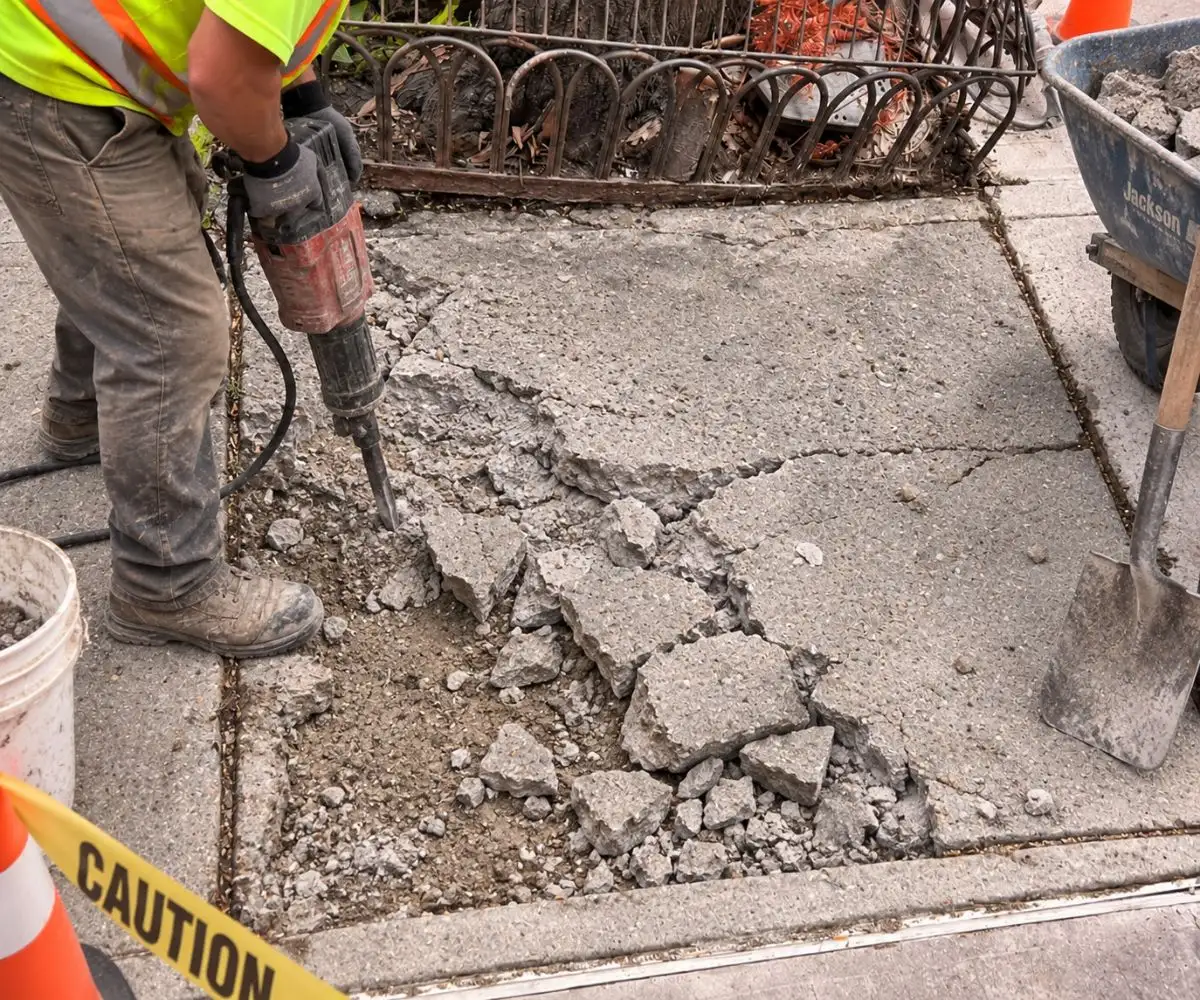
With approvals in place, the three damaged slabs, roughly 75 square feet of walking surface, were removed. Root pruning was carried out within the scope authorized by the Parks permit, cutting back the growth directly responsible for lifting the concrete. A root barrier was installed to redirect future root growth away from the repaired section, reducing the odds of the same slabs failing again in a few years.
Only after the root conditions were addressed did new concrete go in to rebuild the sidewalk to spec across the affected frontage.
Why the Repair Didn't Stop at Pouring New Concrete
A straight slab swap would have left the underlying root structure untouched, an approach that tends to buy a property owner a few quiet years before the same cracks reappear. Pairing the concrete replacement with pruning and a root barrier was the difference between a temporary patch and a repair built to hold. Learn how tree roots damage sidewalks and what repair options are available.
"I'd rather deal with the extra permit now than redo this whole thing in five years," the homeowner says. "Especially with everything that goes into getting anything approved around here."
Closing Out the DOT Violation

Since the damaged sidewalk was tied to an active DOT violation, finishing the concrete work wasn't the last step. The completed repair went through NYC DOT inspection, and once the slabs and root work met the required standard, the violation was cleared and signed off.
"The permits felt like the hard part," the homeowner says. "The inspection at the end was almost anticlimactic. It just passed. DOT Sidewalk Repair NYC handled the paperwork end to end, which is honestly what I was paying for as much as the concrete."
Wrapping It Up
At 115 E 37th St in Murray Hill, three root-damaged slabs and roughly 75 square feet of sidewalk have been replaced, the responsible tree roots have been pruned and redirected with a barrier, and the DOT violation tied to the damage is resolved. The project shows what DOT Sidewalk Repair NYC handles on landmarked blocks: LPC and Parks approvals up front, root work before concrete, and a final DOT sign-off to close the loop, all for a project that came in around $4,500 including permits. For historic-district homeowners facing a similar root problem, the takeaway is the same one that applies anywhere else in the city: fix the root, not just the crack it left behind.